Friday, February 26, 2016

Third by Wendy Wasserstein

-->
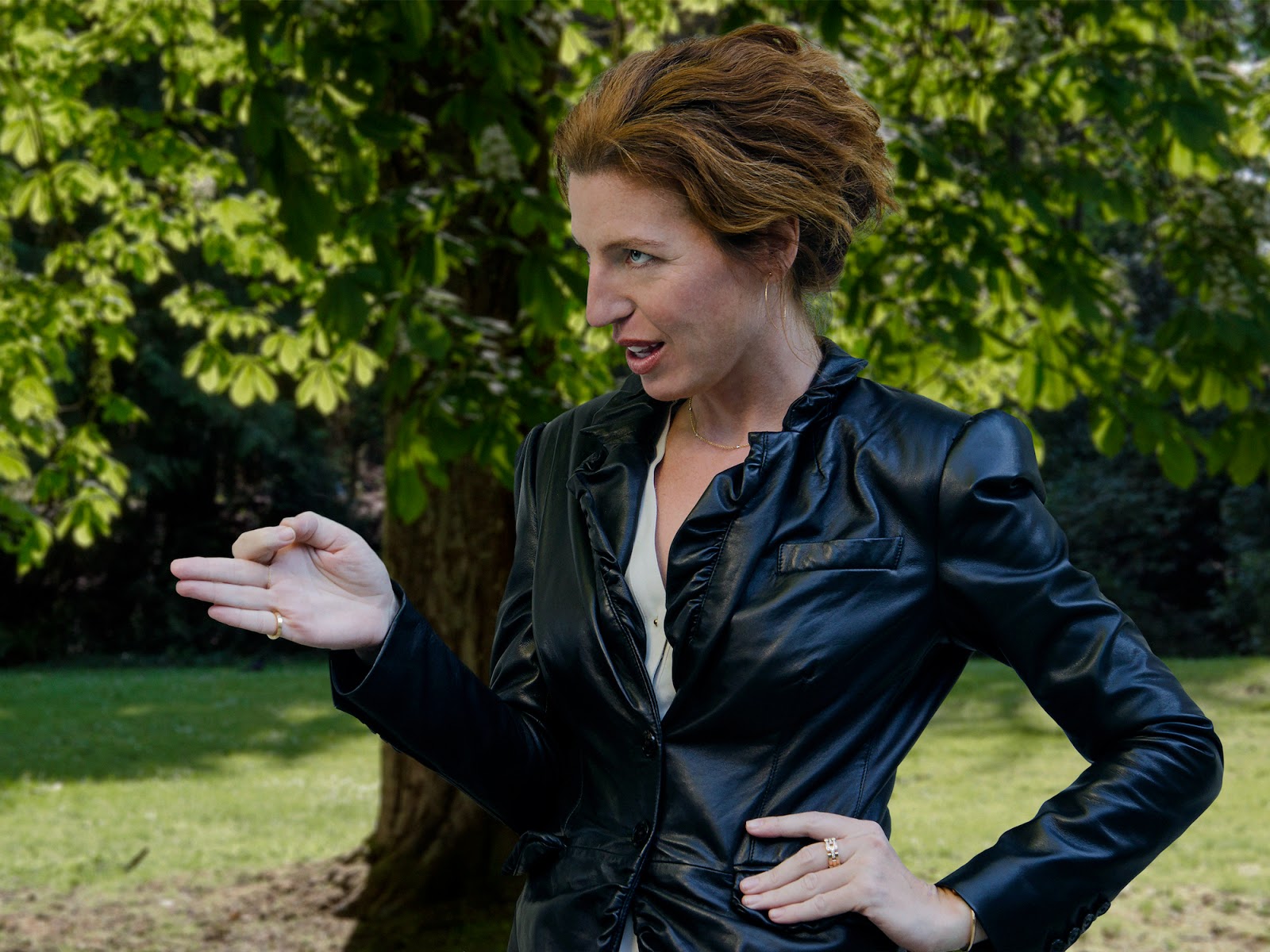
L. Dolores Aguanno and Irene Muzzy - Photos:  dee-Lightful


By Joe Straw

It is tough being “famous” – ask any college professor. – Narrator

At first glance, her seams were slightly weathered; the glasses were a dead giveaway that life was catching her. Overall, she was tailored and kept, and one would think, looking at this woman, that she had all her ducks in a row.

But Laurie Jameson (Dolores Aguanno), a famous professor at a liberal New England college, is unaware that her life is slowly falling apart at the seams. 

In this quiet New England town, she toddles about the campus in an independent fashion, a self-assured woman who is most certainly aware of life around her and is able to appreciate life’s peculiarities. And in her whole life, she is not shy about taking control of every situation for a cause, her cause.

Laurie was as “famous” as they come, a “superstar” in her ranks, and academia never had it so good.

But life has a way of presenting problems.  And they come to this professor, in small increments, languorous, and in the very quiet, bewildering moments. 

In her reality, conflict is a moment waiting for that unexpected jolt.

Actors Workout Studio and dee-Lightful Productions present Third by Wendy Wasserstein directed by Robert Cicchini and Produced by Dolores Aguanno/dee-Lightful Productions, and Fran Montano/Actors Workout Studio through March 6th, 2016 at The Actors Workout Studio in North Hollywood.  

Third by Wendy Wasserstein is an extremely satisfying night of theatre with exceptional performances.  Wasserstein brings a satisfying comedic truth to strong women who are in various stages of physical and emotional disarray.

Cicchini, the director, skillfully directs the five-member ensemble, hitting some very high marks with the actors and their poignant interactions.  And all of this makes for a great night of adult comedy.    

On this first day of new academic year, Laurie starts with a lecture that she’s given many times before, the one about Shakespeare’s King Lear – not thinking that there will be any cause for concern so early in the term.

But, at the end of her lecture, something disrupts her social order. 

Woodson Bull the Third (Drew Hellenthal) approaches Professor Laurie Jameson.  He is a nice looking student, collectively wise, and comes with a pedigree.    Third is a wrestler on scholarship, a recent graduate of Groton,(*) and he has a small favor to ask.

(*Groton is a private school for those who can afford $56,000 per year – not including books.)  

“How, can I help you, Mr…?” – Laurie

“Bull.  Woodson Bull.” – Third

“You’re kidding!” – Laurie

“No, ma’am.” – Third

“You don’t have to call me ma’am, Mr. Bull.  This isn’t The Citadel.” – Laurie

“I know that, ma’am.”  - Third

Ouch! This is the moment when one wants to get things off on the right foot, but doesn’t.  These two clash at the first outing. And as the imaginative dark clouds start moving in, we learn that Third’s father and grandfather went to this very same college back when it was a “men’s college”.

The way he said it, “men’s college”.

And although it is very subtle action, a ridged wall raises.  It is slightly imperceptible at first glance, but there is a separation.  Laurie’s shoulders are squared, and her head tilts slightly as she recognizes the sound of the unmistakable tone of “white privilege”.

Be that as it may, Third can’t make the required film screening of Dr. Jonathan Miller’s production of King Lear because of a wrestling match obligation.  But Laurie is not cutting anyone any slack – if he misses the screening, he will suffer the consequences.

“I am not going to play ‘in loco parentis’ with you.” – Laurie

It is rather pretentious action for this former Oxford Fulbright scholar who has no plans of being a nurturing parent to any of her students, and in particular, this one.

A few weeks later in Laurie’s home, George W. Bush is speaking to the United Nations on television, and Laurie, listening intently, understands that every unfortunate word spoken, provokes action, from speech, to step, to marching boot, the country is going off to war yet again.  And she is not happy about it.

That’s when Emily (Taylor Solomon) enters and sees her mother screaming at the TV. She decides to take action and turn it off.

Even after calming down a bit, Laurie doesn’t understand why her youngest daughter isn’t out there protesting the war.  But Emily can only be cynical about the war, cynical about her lesbian sister Zooey (not seen), and cynical about Zooey’s partner Rena (also not seen). By Emily’s notion, Zooey and Rena are also not fighting the war by making organic cheese in Vermont.

“It’s not Zooey I have a problem with.  It’s her girlfriend Rena.” – Emily

“How could you have a problem with Rena?  She’s a Guggenheim poet.” –Laurie

“Mother, there’s more to life than prizes.” - Emily

There is a subtle point made here.

Naytheless, Emily comes home, after six weeks away at college, and finds that her upstairs bedroom is now her father’s noisy gym. Grousing about that tidbit of information Emily lets loose that she is romantically involved with a college dropout, from the less than prestigious Trenton State. 

Perturbed by the noise upstairs, Emily’s grandfather Jack (Christopher Pennock) wakes from his nap.  He cringes at the sound of one more noise in his head disrupting his mental faculties.  But notes that he tries very hard to keep focus by recognizing his surroundings and counting backwards, with little success.

And, later, to top everything else off, Laurie’s best friend and colleague, Nancy (Irene Muzzy), is fighting a reoccurring bout with cancer. Laurie wants to take up the fight right along side of her.

 “You are my best friend here.  Your doctor told me you had difficult choices to make.” – Laurie

“What?” – Nancy

“I hope you don’t mind, but I called your doctor the other day.  I told him I was very concern.” – Laurie

Nancy, taken aback, says, “I deserve the privilege of my privacy.”

Suddenly, in their discomforting intimacy, they are interrupted by Third, and a substantial private moment between the two vanishes into thin air.  Nancy, leaves in a slight wisp of light, and without a resolution. And Third’s timing, and his privileged antics annoy Laurie.

Laurie is at the crossroads of her life.  Not completely understanding her inscrutable intentions, she needs help and seeks the advice of her mute Freudian analyst (not seen).  Overall she is losing unwinnable battles, and having hot flashes, which is not helping her.  

Weeks later, after grading Third’s paper on King Lear, Laurie does not believe that he wrote the paper. She accuses Third of plagiarism and tells him that she will bring him up on academic charges.

There is a tremendous amount of light in Cicchini’s direction. His genius of having Laurie prance about the board meeting with flashing lights was a complete joy to watch and totally unexpected.
 
And while most things in Cicchini’s direction worked, some things needed additional attention. In a play such as this, momentum is important and the interminable scene changes alters the momentum of the play.  A college is always in a constant state of flux and perhaps there is an imaginative way of dressing the set while the action is taking place on stage.  (The Set Design was credited as “A collaboration”.)

Dolores Aguanno does an admirable job as Laurie Jameson, a professor with a very strong will. More work needs to be done in the second scene when she is speaking with her daughter but for the most part the acting is solid.  The scene with the analyst, and the time Aguanno took to get a reaction from her, was especially strong.  No, it was perfection.

L. Taylor Solomon, Drew Hellenthal


Drew Hellenthal is Woodson Bull, the Third. He is a very interesting character, a freshman, and a product from a very good private school.   He is an athlete on a wrestling scholarship; he is also smart although at times not very articulate.  Hellenthal, while very appealing on stage, doesn’t go far enough with the character.  There are many more layers to the character of a wrestler, the celerity of movement, of making weight (which wrestlers are always trying to do), and running to and from classes would more to add to the character. Also, the conflict between him and the professor is not entirely solid and should be clearly defined.

Taylor Solomon does a fine job as Emily Imbrie and adds a nice quirky quality to the character. One particularly likes the shorter haircut to the longer hair in the photos. The scene in the bar needs additional layers. Emily needs to somehow tie her connection to her mother to really get Third down on his knees in this scene.  A photograph perhaps?

Christopher Pennock presents a large majestic figure as Jack Jameson.  His final scene is poignant but one that must overtly convince his daughter into action and into the final scene. Still, some very nice work.

Irene Muzzy, as Professor Nancy Gordon, is exceptional as someone who battles cancer. Nancy, frazzled and worn, rides a different horse of complicity; of understanding the problem but letting the combatants work it out on their own terms. Very nice work!  

Other members of the cast that did not perform on this night are Allegra Williams (Emily Imbrie) and Stephen Mendillo (Jack Jameson).

Fran Montano welcomed me to his beautiful theatre in North Hollywood and we had a great time talking about my former teacher Michael Shurtleff.

Other members of the crew are as follows:

Robert Cicchini – Sound Design
John Stirrat, Graydon Stroud, Sergiu Iva – Lighting Crew
John Stirrat – Light and Sound Board Operator
Elise Robertson – Set Consultant and Scenic Painter
John Stirrat, Graydon Stroud, Allegra – Set Crew
Graydon Stroud – Stage Manager
Graydon Stroud and The Actors – Backstage Crew
Laura Petersen – Program
Caitlin Michael Riley – Theater Administrator

Run! Run! Run! And take your favorite professor with you!

Reservations:  800-838-3006

Online Ticketing:  http://www.third.brownpapertickets.com

Actors Workout Studio
4735 Lankershim Blvd.
North Hollywood, CA  91602

Sunday, February 14, 2016

Jack and Jill A Romance by Jane Martin


Robert Standley and Tanna Frederick - Photos: Adrien Carr


By Joe Straw

Jack and Jill went up the hill
To fetch a pail of water.
Jack fell down and broke his crown,
And Jill came tumbling after.

They were young, so very young.

Jack, a small boy in kaki shorts with an active imagination, wanted to impress a little girl in a frilly embroidered dress, by taking his empty wooden bucket up the hill to “fetch” a pail of water.

Jill, knowing that wasn’t the way, followed Jack anyway. Jill had enough sense to know that the water was always at the bottom of the hill, but kept quiet and enjoyed his way.    

Young Jack suddenly realized, through observation, that he had misjudged the water in the elevated space.  There was no spigot, fountain, or water magically pouring out from the trunk of the tree but he didn’t want Jill to know that he had made a mistake.

So, Jack dropped the bucket, got his foot entangled in the handle, fell, and plunged much farther than expected.

Jill, deeply in love, saw Jack rolling down the hill and well, by now, it’s too late, Jack is rolling faster than Jill can keep up.  She stumbles, trying to catch him, slightly causing him to change his direction when his head rolls onto a rock, breaking his nose. 

Crying and bleeding, Jack runs home, leaving Jill with an empty bucket and thinking that it all could have been avoided if she had only used her words.  – Narrator

They were young, well not so young, and in the library, or a bookstore.  Jill (Tanna Frederick) was reading Sylvia Plath and Jack (Robert Standley) appeared suddenly out of nowhere surrounded by a pile of books he would probably never read.

The light on Jill elevated her looks, slightly.  No matter, he simply thought she was divine.  And she, well, she couldn’t see what anyone saw in her.

That was just her thing.

“I was, from over there in the stacks, struck, stuck by you… viscerally struck… as if you cared, right?” – Jack

The moment didn’t matter.  The fact that she was in front of him, that they were both there together, sharing a moment, however inarticulate, seemed right.  

But, right now, they were both verbally awkward as though the English language had deserted them.   

“I’m not in the market for the wrong compliment, Jack.” – Jill

Ouch. Well, okay so things are not going well, at least for him, or her, depending how you view the situation.  Funny, but she controls the strings, and he seems to be caught in her snare.   

“So, please, and I mean this, don’t take leaving me alone personally…” – Jill

But struck by his insistence or charm, Jill invites him up to her apartment.  And it is no secret to anyone within shouting distance that Jill is a little offbeat, everything that happens, happens on her terms, her rules, down to the minute details, including wearing a condom and having no penetration.

Later in their relationship, things change.  Jack believes that they should move to California, that she should follow him, because her job is transferable, and he will be the breadwinner as an imagist. What this really means is that Jill doesn’t understand what it means, or doesn’t care what it means.  All she sees is that he carries a few boards around with him from time to time.   Jill, not really thinking about his moment, is not too hot about picking up and leaving, especially since she is thinking about going to medical school.

“Jill, stop reacting and listen…” – Jack

“Don’t give me your “I’m dealing with a barely rational creature” voice. It’s demeaning.” – Jill

This is probably not a conversation you want to have with a woman.

“I really must not. Build a life around somebody else…”   - Jill

That’s when Jack pops the question, you know the question, and really Jill is not in the mood for that. She wants something different in from their relationship.

“What, then?” – Jack

“Companions.” – Jill

“Yes.” – Jack

“Meaning…” – Jill

“Yes?” – Jack

“Equal voice.” – Jill

Jack throws the equal voice argument to the side as he says that she makes most of the decisions.  And it’s kind of interesting because she does, except for the moving part.  But strange as it seems Jill suggests that they flip a coin to make a solid decision, “Heads it’s California, tails it’s here”. And then suggests they not look at the results of the coin toss.  First they go out to dinner, come back, have penetration, grill up some “horrible meat” in the morning, draw up a prenuptial agreement and then look at the coin.

(All that time without looking! For the love of God Jack, go look at the coin, at least make an attempt, to satisfy all male instincts!)

Later Jack has second thoughts about getting married, good thoughts while alone with a beer and talking to himself.  

“So, why would you get married in the first place…why?...why would you do that?” – Jack

And a determined Jack confronts Jill.

“I can’t marry you, I’m a bad person.” – Jack

“I see.” – Jill

And as Jill listens to all of his faults, she somehow manages, tenderly mind you, to throw the rope and wrangle him back to the stable.

“I love you… or something.” - Jill

Things never last; the desiderata one seeks in a partner never comes to pass.  One might blame her inability to articulate her wants, and his inability to express his feelings.  

Jack and Jill by Jane Martin, directed by Jack Heller, produced by Tanna Frederick, Lauren Beck, and Rosemary is playing at the Santa Monica Playhouse through March 27th, 2016.   

Jack and Jill is a fantastic romantic comedy with standout performances by Tanna Frederick and Robert Standley.  The intimate moments, when the actors break the fourth wall to find a reassuring ear in the audience, are absolutely amazing.   It is a testament to intimate theatre in an intimate space.

There is something different about Jack Heller’s (the director) vision.  Gone are the dressers (characters written as part of the play) that play a fundamentally important part of the process that solidly defines the through line.  It elucidates the devotion the characters have to each other while neglecting the unimportant things around their life. Naytheless, Heller guides the actors, and the pugnacious characters, in his version, to give a sophisticated nuance to the roles.   And those moments are clearly defined.  

All right, so what doesn’t work?  Well, the opening needs work.  We are rushed into the moment without having the characters clearly identified – where they are, who they are, and what they want. We go straight into dialogue without letting the moments happen.

(And, as an aside, this is a play specifically written for the characters to listen carefully and then react. There are just a few moments, at various points in the play that need special attention to listening.)

For Jack in the opening moments, it is the look, the stalk, the introduction, and the insistence that should take time. For Jill in those same moments, it is the look, the avoidance, and the complete disregard of another human being in the room.  

Tanna Frederick


Tanna Frederick, as Jill, gives a fantastic performance and the moments to the fourth wall are outstanding giving us the “thing” that defines the character in one dramatic fell swoop. That said, one would appreciate Jill with more strength, someone who definitely knows what she wants, but is inarticulate when expressing those thoughts.  There are moments in Frederick’s performance where I want to stand and applaud.

Robert Standley


Robert Standley, as Jack, does some outstanding work on stage.  Jack says he’s an imagist and one would like to see how that translates to his character on stage in manner and dialogue. He speaks in images, not words, inarticulate visions that are indescribable.  There is a lot to be said about a character that stands next to a beautiful Greek girl, shoulders touching, and just enjoying the moment, without finding the words, for nine straight hours. That aside, Standley gives a remarkable performance and the finest work I have seen from him to date.  

The play’s author Jane Martin may be a pseudonym, collaboration from the likes of Marcia Dixey and Jon Jory. It certainly feels like a specific kind of truth written for two sides of the gender coin. They speak a gendered language that rings true to the core.  Also, the characters don’t hear each other.  One talks over the other. They speak in short sentences, in dramatic aposiopesis, except when talking to the fourth wall.  And the greater conflict in this piece is a character not getting a grasp on what the other character is feeling.   

And all of this makes for fantastic theatre.

Fritz Davis is responsible for the Video Projection (the running scene was fantastic).  Also, the cityscapes on the upstage walls added a lot to the look of the production although I was lost at one point determining what city they were in.  Davis was also responsible for the Sound Design, which were comprised of pop standards that worked effectively.

Other members of the crew are as follows:

Donny Jackson – Lighting Designer
James Cooper – Set Design
Victor Sonnora – Scenic Design
George J. Vennes III – Production Stage Manager
Fangyuan Liu – Costume Design/Production Assistant
Anaid Gutierrez – Make-up

Tanna Frederick, Lauren Beck and Rosemary Marks produced the show in the fine intimate setting of the Santa Monica Playhouse.

Run! Run! Run!  And take a long lost lover.

One more thing, this exciting show will only get better as time progresses.

Santa Monica Playhouse Main Stage
A Guest Production
1211 4th Street
Santa Monica, CA  90401

Reservations:  323-960-1055

Online Ticketing: www.Plays411.com

Sunday, January 24, 2016

The Last Straw Awards 2015

-->
By Joe Straw

I remember shows for years.  Not every infinitesimal detail but the general outline of the show, what worked, what didn’t, the moments that made the audience gasp in surprise, or in horror.  But mostly I remember the moments that propelled the actors onto the stage, and those moments when actors proudly came off stage – supremely satisfied by what they had done.

Meeting an actor after a successful performance is extremely fulfilling and I wish there were many more meet-and-greets after shows.  Because, that’s what this business is all about, being seen. 

In any case, these are the actors, writers, and directors whose work I considered exceptional.

Actors:

Proof By David Auburn - Moth Theatre
Amanda Brooks - Catherine
Felicity Price – Claire

Hellman v. McCarthy by Brian Richard Mori – Theatre 40
Dick Cavett – himself

finding Nick by Nicholas Guest – Zephyr Theatre
Nicholas Guest – himself

The Glass Menagerie by Tennessee Williams – The Renegade Theatre
Wilson Better – Tom

The Pied Pipers of the Lower East Side by Derek Ahonen – The Matrix
Patrick Scott Lewis – Donovan

The Woodsman by Steven Fechter – The Coeurage Theatre Company
Tim Cummings – Walter
Cesar Ramos – Carlos
Joey Nicole Thomas – Nikki

Light Sensitive by Jim Geoghan – The Moth
Preston Acuff – Tom
Sasha Kapustina – Edna
Ned Liebl – Lou

Oh My God by Anat Gov
Mike Burstyn – God

André & Dorine by Jose Dault and Garbine Iñsausti – Los Angeles Theatre Center
Jose Dault
Garbiñe Insausti
Edu Carcamo

This is a Man’s World by Sal Lopez – Los Angeles Theatre Center
Sal Lopez

The Misanthrope by Moliere – adapted by Tony Tanner
Kathy Bell Denton – Arsinoe

Little Red – Book by Anthony Aguilar & Oscar T. Basulto – Music by Quetzal Flores – Lyrics by Anthony Aguilar & Quetzal Flores – Casa 0101
Xolo Maridueña – Corky
Ray Steward-De La Fuenta – Don Coyote

King Dick by Christian Levatino – Gangbusters Theatre Company
Christian Levatino – E
Corryn Cummins – Dottie Stevens 

Richard III by William Shakespeare – The Eclectic Company Theatre
Jesse Merlin – Buckingham
David Pinion – George Duke of Clarence

Orphans by Lyle Kessler – Theatre of NOTE
Darrett Sanders – Harold

The Great Divide by Lyle Kessler – The Lillian
Mark McClain Wilson – Noah

Mojada A Medea in Los Angeles – a new adaptation by Luis Alfaro – Boston Court at The Getty Villa
Marlene Forte – Armida
VIVIS – Tita

Cat On a Hot Tin Roof by Tennessee Williams – The Lonny Chapman Theatre
Madeline Fair – Margaret
Daniel Kaemon – Brick
Kyra Schwartz – Mae

No Exit by Jean Paul Sartre – Oh My Ribs! Theatre
Carolyn Hennesy – Inez

Boyle Height by Josefina López – Casa 0101
Javier Ronceros – Ruben
Karina Bustillos – Rosana

Nat Turner:  Following Faith by Paula Neiman – Theatre/Theater
Sade Moore – Nancy
Phrederic Semaj – Hark

Garbo’s Cuban Lover by Odalys Nanin – Macha Theatre
Clementine Heath – Garbo

57 Chevy by Cris Franco – Los Angeles Theatre Center
Ric Salinas – Cris, Jr.

Pain by Paul Coates – Caminito Theatre
Fred Fate – Various roles
Paul Coates - actor
Lisa Beezley – Charlotte

Writers:

Clean Start – writers Kathy Fischer & Josefina López
King Dick – writer Christian Levatino
In Love and Warcraft – writer Madhuri Shekar
Mojada A Medea in Los Angeles – writer Luis Alfaro
The Latina Christmas Special – writers by Maria Russell, Diana Yanez, and Sandra Valls
Pain – Writer Paul Coates

Directors:

John Markland – Proof by David Auburn
Jeremy Lelliott – The Woodsman By Steven Fechter
John Markland – Light Sensitive by Jim Geoghan
Christian Levatino – King Dick by Christian Levatino
Jessica Kubzansky – Mojada A Medea in Los Angeles by Luis Alfaro
L Flint Esquerra – Cat on a Hot Tin Roof by Tennessee Williams
Edward Padilla – Boyle Heights by Josefina López

And the Ortiz Award 2015, representing diversity in a theatrical presentation goes to
Boyle Heights – Casa 0101

Thank you to the Los Angeles Theatre Community.

Tuesday, January 19, 2016

Pain by Paul Coates

Paul Coates & Delta Rae Giordano In PAIN City


By Joe Straw

My sister is dying, stage 4 cancer, it’s everywhere.

She is in good spirits and laughs all the time.   

I call her on my way home from work on most days, to see how she is doing.  Her phone doesn’t work.  Well, she can’t make calls; she can only receive them.  It’s one of those “pay as you go” phones and the paying part is just part of the problem.  

And at this point in her life it’s the little things, like getting a phone that works that become an insurmountable obstacle to her daily living.     

Also, I’ve been speaking to her about her end of life and what she should be doing. Well, she’s headstrong and hardly listens to anything I have to say. “Get a new phone. Sign your will.  Take care of the cremation stuff and, for the love of God, call the real estate lady.” 

She takes the notes; writes big, because she is blind in one eye and can hardly see from the other. Her thinking is not all that clear, after the stroke.

She is homebound, can’t drive, and relies on others for help. Little gets done.

I’ve arranged food to be delivered to her home, Meals on Wheels, for which I am thankful.  

But, I am numb with pain at this point.  I can only do what I can do from California. And I’ve come to the conclusion that dying is easy, it’s just that the living part is so exasperating and painful.  - Narrator


The Theatre Academy- Los Angeles City College presented Pain, a world premiere written and directed by Paul Coates on Saturday November 7th, 2015 in the Caminito Theatre.

Walking into the theatre taking my seats, I noticed five dissimilar chairs on stage.  Black music stands, remind of me of some incredibly happy times, and are carefully placed in front of the chairs.    

And, PAIN, drawn in what appeared to be a bright red lipstick, was projected on the upstage wall. 

Five chairs – not really what I expected – seeing other incarnations of this reading, photographs, on Facebook. I surmised this would be a scaled back version, an intimate night, with an intimate cast. 

When life moves, things change in a heartbeat. And as the lights go up, five chairs suddenly become more than twenty chairs.  And actors move fastidiously, sidestepping to not bump into the furniture and land on their place like blebs on a spider’s web. 

Elizabeth Reilly, David Youse, Bill Barker and the cast of PAIN City.
  

The show is to be presented in the style of “Reader’s Theatre” and the actors, most knowing their dialogue while some read, will present in a fashion that was comfortable to them.  They are made up of professors, professional actors, and students.

Pain by Paul Coates is a labyrinth, a web, a dollop of interconnecting nerve that is captured by the emotional core of the willing and unwilling. And Pain is also a deeply fascinating work of art in which the characters are finding ways to relieve the pain through human interaction.   Their interconnected physical lives are linked in various ways, and in life’s fashion, and their emotional connectivity lingers long after they have parted ways.  

At the core of Pain are the feelings one releases when caught up in the emotion of someone’s agony.  Some situations are easily identifiable when watching human interactions in the theatre.  It’s the thing that places you in their time and space, caught in the character’s expression. At times, Pain is funny, and other times you are invited to be riveted inside the life of the character.

The interesting part of it all is that Pain has no boundaries, and one anticipates the emotional solution from the interconnecting weave.  And that is what makes Pain so fascinating – it is filled with delightful surprises.   

People come and go with their pain.  

Pain begins with the loss of a child, Chloe (not seen).  She dies suddenly under the care of another, Becky (Persephone Laird). Everyone regarded Chloe a problem child and no one is sure how she died, just that it happened.  This doesn’t sit to well with the mother of the child, Linda (Rene Michelle).  She is grieving, in her way, and she lets it be known that she can never see that childcare woman again.

Linda confines to her best friend Mark (David Youse).

“Can you see a hole?” – Linda

“Yes, I do.” – Mark

In these trying times, only a friend would comfort her in the best way he knows how.

Moments later, a father, Frankie (Al Rossi) buries his son, Danny (Not seen) and deeply mourns him, carries his photo around while neglecting his other son, Seth (Bryson Jones Allman). Seth, in deep turmoil (he’s right there!), is at a loss as to why he doesn’t count in their relationship and appears to have emotional problems of his own.  

The nurse (Christelle Baguidy) tells Seth that his father is doing better.  She knows pain firsthand being brought in 17 years ago with 200 broken bones ultimately relieved by the morphine drip.  

But, Seth doesn’t feel anything.

“What do you want, Seth?” – young man

“I want to feel pain.” – Seth

And while Seth might not feel pain, his sister Chris (Jessica Atkinson) is as she is screaming in labor, too late for the epidural while the nurse is speaking suggestively about her husband.  

Angela 2 (Megan Gomez) plays basketball and is not sure about her emotional life and her physical needs, why she can’t communicate with others around her, the pain of being isolated, forgetting there is someone watching her.  And that someone is Miles (Michael Macrae) who playfully throws a paper airplane clear across infinity (the stage) directly into her hands, professes his love, but is completely misunderstood by the receiver. (Blame the young writer.)

“Miles is inside my heart… I hate him.  I love him.” – Angela 2

Corinne (Elizabeth Reilly) is not related to the bartender (Brendan Broms) but imparts the information that one does to a complete stranger serving drinks.  The bartender is a receptacle for information for barflies to belly up and unload a lot of pain.  The Oral Surgeon (Fred Fate) joins the party to relieve the nonsense he has to put up with.  A little mind numbing liquid refreshment would do his trick.

And then, coming out of the proverbial wings, is Phil (Paul Coates) playing Willie Lohman in Death of A Salesman. Phil is forgetting his lines and he doesn’t know if he is up to the task of playing the role after the recent passing of his wife Susan (not seen) but the director (Fred Fate) convinces him that now is the time to do this, that he has to work, he has the emotional requirement now to convey the pain in the role. The director implores Phil not to leave.

The first act draws to a close at this point and the particular scene is so wonderful that everyone in the audience takes a deep breath before leaving the theatre.   

Reader’s theatre is an acute instrument but ideally I would have wanted the actors up on their feet and interacting to get a feel of the relationships and a sense of place. Still, this night served a purpose – a benefit for the Los Angeles Community College – and a chance at least to hear the words of Paul Coates.

Fred Fate does some marvelous work here, not only in this scene but also as the wacked out oral surgeon, a dotard, and not working on all cylinders.  Fate is a master craftsman, a teacher of the craft, and outstanding on the stage. He puts it all out there that at times his face turns bright red, hair drenched, sweat pouring from his face, and one gets a little concerned for his safety at his emotional outpouring.  Fate is wonderful to watch.   

Paul Coates, the actor, also does some marvelous work on stage, pushing a lot of emotional buttons, and never letting go of the pain.  It’s the mark of a true craftsman when everyone is feeling what he is feeling inside.

Lisa Beezley plays Lisa and Charlotte, the agent. Juggling is what agents do.  Ten things on her mind while trying to make the deal, book the client, manage your life (what little there is), and make sure the employees do the right thing. Beezley is a remarkable actor that manages the agent’s life, the employee, and her mother all with an exquisite finesse.

Brendan Broms plays Steve, the bartender.  Broms has a nice presence on stage and plays host to other characters at the bar.  (If this hadn’t been Reader’s theatre, I would have included a bar center stage and had the other actors belly up to the bar.) Other than that, one wasn’t sure how this character fits in the overall scheme of the play.

David Youse & April Audia in PAIN City


“…he was a mean son of a bitch, but I loved him.  I’m 53, Marty.  I loved you but it’s time to cut you lose.” - Elaine

April Audia plays Elaine, one of Steve’s customers.   She imparts her pain, telling him, in a manner of speaking, that her husband committed suicide.  It’s not a particularly good time with their three kids in grade school.   Despite the passing of time, she doesn’t seem too broken up over it. It is something that happens, life. Audia’s performance was natural and nuanced, profound, and to the point.  It was simply, a marvelous job.

Christelle Baguidy played the Nurses, various nurses for various situations.  And in those roles she did really well. In a slight call out for more diversity, one would have like to have had Baguidy have a more substantial role. That aside, Baguidy is extremely appealing and natural on stage. She is also stunning.

Megan Gomez plays Angela 2, a basketball player who may or may not be in love.  A clearer objective would help understand the character. We know that she is in love.  But the reason for her conflict is puzzling and we need to understand her predicament. And, if she knew how to handle a basketball, convince us that she is a player that would also help with the character’s intention.

Michael Macrae plays Miles, the young man who is in love with the basketball player, but really doesn’t understand her final outcome.  The most he can do is tell his boss.  But if he is not feeling it then we are not feeling it as well.  Still, Macrae has a good look but more work needs to be done.

Persephone Laird plays Becky, the woman who was in charge of the child who died. There is something wrong with Becky and I’m not sure we got to the bottom of it during this reading. With the death of the child she loses everything, her business, her job, and even her own kids but feels little about what happened.  Or, so, that is the interpretation I got on this night. This performance did not work for me and I think it has something to do with apology and relationship to her counterpart.  

Al Rossi plays Frankie, the father who carries the picture of his dead son, neglecting his other children.  This is definitely one role that I would have liked the actors up on their feet on.  Pain is a private moment, but having it private in this instance, doesn’t work to its best advantage, especially when there are two other lives in play here, his children.   What good is pain if you cannot share it?

“Once upon a time there was a little girl Dina who had some issues…she looked like a princess but felt like a prince.” – Dean

Frank Salinas plays Dean.  Salinas has a good look and an interesting way about the stage.  But, the character Dean requires more definition, a nuanced personality, mistakes in mannerism, and a stronger core. The play is called Pain and we’ve really got to feel it from this character.

David Youse plays Mark as a character that you want to run to, if only to share your pain.  Youse is a very appealing actor and makes the most of Mark, a character which one is not totally convinced of his overall objective.

Bill Barker does yeoman’s work as Mr. Goldstein, the friendly, trusting patient to an out of control dentist.

Lisa Beezley, Michael MacRae, Ben Rovner and the cast of PAIN City


Christopher Callen as Angela has exceptional appeal on stage and was wonderful to watch. Delta Rae Giordano plays Vicky for whom the stage seemed comfortable to her. The painful presence of someone not forgotten.   Maria Rangel was very appealing as Isla. Elizabeth Reilly plays Corinne and Ben Rovner also has a nice turn as Coal.

An interesting thing about this type of theatre is understanding the relationships as the actors read or perform behind music stands.  Preferably one would like the actors on their feet throughout, attached by a string or lights to completely understand their relationship, positioned in a way to have them in and out of the scene, defined in such a way that we get the relationship e.g., father/son, father/daughter, employer/employee, etc.  We see, in traditional theatre, how relationships manifest themselves in place and in the passage of time. We get the actor/director relationship, the dentist/patient relationship because of their proximity of space. 

The other types of relationships we have to figure out, like Dean and Dina.  The program said, “Dina is friends with Dean”.  My impression was that Dina had become Dean. Also, Mark had an ex-lover Randall (we do not see) and Randall had two sisters Charlotte and Corinne.  But’s Mark’s relationship to Charlotte and Corinne was minimal and I don’t remember them being together in the same place.

That aside Paul Coate’s direction was marvelous, and his words always hit home, the natural chords of life. And the play manages to hit those chords. But one would ultimately like to have the final moment where the point of the play, the through line, hits solid. Still, I loved the work and felt the pain, deeply.

The production manager was Jenny Bacon.

Run! Run! Run!  See it in New York in the next incarnation.